Compressed Air Audit Services in Chicago
High operating costs, pressure loss, air leaks, moisture, and inefficient compressor performance can all affect the reliability and efficiency of your compressed air system.
Harris Equipment provides comprehensive compressed air audits for industrial facilities throughout Chicago. Using system operating data and detailed analysis, our team identifies energy waste, leaks, and inefficiencies and provides actionable recommendations to help reduce operating costs and improve compressed air system performance.

Types of Compressed Air Audits
Compressed air audits help identify the specific issues affecting your system, from hidden air leaks and inefficient equipment to excessive air use and high energy costs. Each audit focuses on a different area of system performance, helping you understand where improvements can have the greatest impact.
Find Where Compressed Air Is Being Lost
Air Leak Audit
Identify leaks throughout your compressed air system that may be wasting energy, reducing available capacity, and increasing operating costs.
Improve Your Compressed Air System Performance
Supply-Side Air Audit
Evaluate compressors, dryers, filters, controls, pressure, and other supply-side equipment to identify issues affecting efficiency, reliability, and overall system performance.
Reduce Unnecessary Compressed Air Use
Demand-Side Air Audit
Evaluate how and where compressed air is being used throughout your facility to uncover inappropriate uses, excessive demand, and opportunities to reduce consumption.
Find Opportunities to Lower Energy Costs
Energy & Efficiency Audit
Analyze system operation and energy use to identify inefficiencies and opportunities to reduce compressed air operating costs.
Benefits of a Compressed Air Audit
A compressed air audit gives your team the information needed to better understand system performance, energy use, and operating costs. Instead of guessing where problems are occurring, an audit uses system data to identify where compressed air and energy may be wasted and where improvements can make the greatest impact.
A compressed air audit can help your facility:
- Reduce compressed air and energy costs
- Improve system pressure and reliability
- Recover available system capacity
- Improve compressor efficiency
- Identify moisture and air quality concerns
- Reduce unnecessary compressor runtime
- Prioritize repairs and system improvements
- Plan future upgrades using measured system data
The result is a clear, system-specific plan to help improve compressed air performance, efficiency, and reliability.
What Do You Receive From a Compressed Air Audit?
Following the audit, you receive a detailed report that turns system findings into actionable recommendations. Depending on the scope of the audit, your report may include:
- Executive summary and key findings
- Compressed air usage and operating cost analysis
- Engineering analysis, graphs, and calculations
- Compressor efficiency compared with manufacturer specifications
- Estimated air leak losses
- Current versus proposed operating costs
- Prioritized recommendations for system improvements
- Estimated equipment and installation costs
- Estimated annual savings
- Updated compressor layout or system sketch
Recommendations can be prioritized based on your facility’s needs, helping your team determine which improvements should be addressed now and which can be planned for the future.
Find and Quantify Compressed Air Leaks
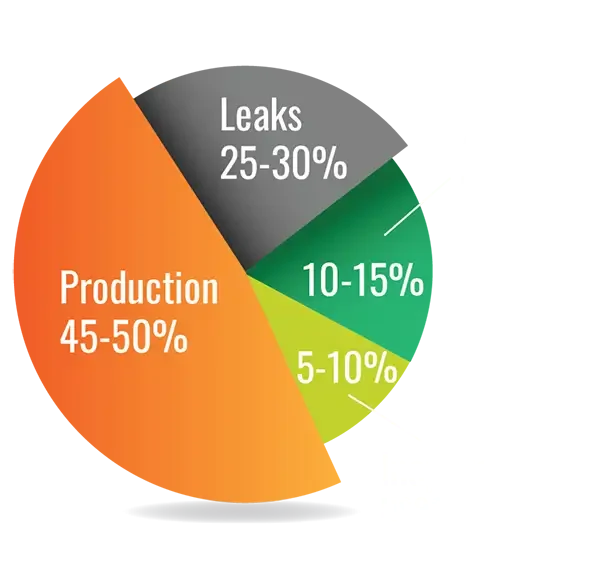
Compressed air leaks increase energy use, reduce available capacity, and keep compressors running harder than necessary.
N2O2 uses ultrasonic leak detection to locate hidden leaks and documents each one with a photograph, estimated leak rate, and annual cost.
This helps your team:
- See where compressed air is being lost
- Prioritize the most costly leaks
- Recover system capacity
- Reduce unnecessary compressor runtime
How Harris Equipment and N2O2 Work Together
Harris serves as your local compressed air partner while N2O2 provides the specialized engineering analysis behind the audit. Together, the process gives your facility detailed system data along with local support for evaluating and implementing the recommended improvements.
Start With Harris
Tell our team what you are seeing in your compressed air system and what you want to better understand. Whether you’re dealing with rising energy costs, pressure problems, moisture, leaks, or capacity concerns, we’ll help determine the appropriate audit scope.
N2O2 Performs the Audit
N2O2 engineers collect and analyze system data under normal operating conditions and develop detailed findings and recommendations.
Review the Results
The audit report identifies the conditions affecting system performance, estimated costs and opportunities for improvement.
Plan the Next Steps
N2O2 develops proposed improvements through Harris, and our team works with you to review the recommendations and determine the appropriate next steps for your compressed air system.
Local Support Beyond the Audit
Identifying opportunities for improvement is only the first step. Harris Equipment provides compressed air equipment, service, and technical support to help facilities address the system issues uncovered during an audit.
Depending on your system needs, Harris Equipment can support:
- Industrial air compressor service and repair
- Preventive maintenance
- Compressor troubleshooting and performance optimization
- Air dryers and filtration
- Compressed air equipment replacement and upgrades
- Energy-saving solutions
- Compressed air system support
- Equipment installation and ongoing service
Our team helps turn audit findings into practical improvements that support better reliability, greater efficiency, lower operating costs, and long-term compressed air system performance.
Get a Clearer Picture of Your Compressed Air System
Whether you’re addressing high operating costs, pressure problems, air leaks, moisture, or capacity concerns, Harris can help coordinate a compressed air audit based on your facility, equipment, and actual operating conditions.
Energy Calculator
Frequently Asked Questions
What is a compressed air audit?
A compressed air audit evaluates how compressed air is generated, treated, distributed, and used throughout your facility. The audit uses system data to identify air loss, pressure issues, inefficiencies, capacity concerns, and opportunities to improve overall system performance.
How do I know if my facility needs a compressed air audit?
Rising energy costs, inconsistent pressure, frequent compressor cycling, suspected air leaks, moisture issues, insufficient capacity, or declining system performance can all indicate that your compressed air system should be evaluated. An audit can also be helpful before investing in new compressor equipment or making major system changes.
Can a compressed air audit help reduce energy costs?
Yes. A compressed air audit can identify sources of unnecessary energy use, including air leaks, excessive system pressure, inefficient compressor operation, artificial demand, and other system inefficiencies. Addressing these issues can help lower compressed air operating costs.
Can an air audit determine if I need another compressor?
Yes. An audit evaluates actual compressed air demand and available system capacity. This can help determine whether another compressor is needed or if existing capacity can be recovered through leak repair, pressure optimization, improved controls, additional storage, or other system improvements.
What is included in a compressed air audit report?
The report will vary based on the scope of the audit but may include system performance data, compressed air usage, operating-cost analysis, compressor efficiency information, estimated air leak losses, graphs and calculations, prioritized recommendations, projected improvement costs, and estimated annual savings.
What happens after a compressed air audit?
After the audit, Harris Equipment can help you review the findings and determine the best next steps for your compressed air system. Depending on the recommendations, this may include repairs, preventive maintenance, equipment upgrades, system optimization, or other improvements designed to increase efficiency and reliability.
What areas does Harris Equipment serve?
Harris Equipment supports industrial and manufacturing facilities in Chicago and surrounding areas with compressed air equipment, service, maintenance, and system support.