Air Compressor Problems? Airend Rebuilding May Be the Solution.
Restore Performance Without Replacing Your Entire Compressor
A worn or failing airend doesn’t always mean you need a new compressor. Harris Equipment can evaluate your airend, identify the cause of the problem, and determine whether rebuilding can restore reliable operation while extending the life of your existing equipment.
With in-house machining capabilities, precision rebuilding, and a 5-year airend warranty on qualifying rebuilds, we help you get more from the equipment you’ve already invested in.
Signs Your Airend May Need Rebuilding
Unusual Noise
Grinding, growling, or other sounds that may indicate internal wear.
Reduced Air Output
Your compressor is struggling to deliver the air your operation needs.
Higher Temperatures
Equipment is running hotter than normal.
Increased Vibration
Excessive vibration may indicate bearing or component wear.
Frequent Shutdowns
Recurring alarms or unexpected stops interrupt production.
Declining Efficiency
Your compressor is working harder to maintain performance.
Rebuild or Replace?
Replacing an entire air compressor can be a significant investment, especially when the problem is isolated to the airend. If the rest of your equipment is still in good condition, rebuilding may offer a more cost-effective way to restore performance without the expense of a complete replacement.
Harris Equipment can evaluate the condition of your airend and help you determine the best approach based on equipment wear, repair costs, downtime, and long-term operating needs.
How Can Airend Rebuilding Benefit Your Operation?
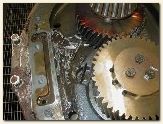
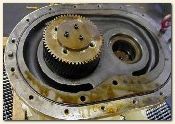
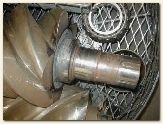
A worn airend can affect compressor performance, increase operating costs, and put your equipment at risk of unexpected downtime. Addressing internal wear through rebuilding can help restore dependable operation and extend the life of your existing compressor.
Reduce Downtime
Address developing airend problems before they lead to more extensive equipment failures and prolonged production interruptions.
Control Equipment Costs
Restore worn components without investing in an entirely new compressor when replacement isn't necessary.
Extend Equipment Life
Get more productive life from your existing compressor by restoring critical internal components.
Our Airend Rebuilding Process
Once your airend is received, it is assigned a work order number and moved into our disassembly area. A documentation folder is created to track teardown notes, measurements, specifications, and inspection findings throughout the rebuild.
After disassembly, all major components are checked for wear. Measurements are recorded, and photos are taken to identify problem areas.
The disassembled airend is thoroughly cleaned and degreased before repair work begins. This allows our team to properly inspect components and prepare worn parts for reconditioning.
Depending on the condition of the airend, Harris Equipment may repair or recondition key components using in-house machining and metalizing capabilities.
Repair work may include:
- Metalizing and machining front and rear covers
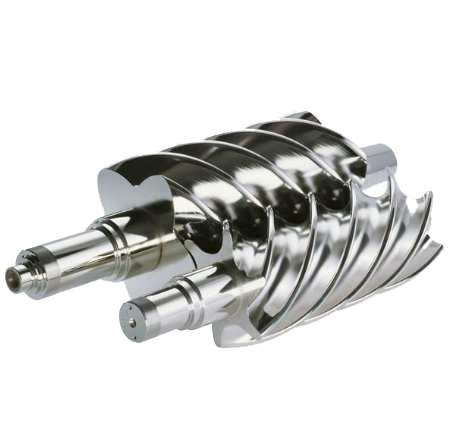
- Turning rotors on a lathe
- Metalizing and grinding bearing journals to specification
- Plating and boring the main bore area
- Building up and re-cutting seal strips
- Reconditioning worn internal components
The amount of repair work depends on the condition of the airend and the damage found during inspection.
After repair work is complete, components are rewashed and moved to assembly. New bearings, seals, gaskets, and related materials are pulled from inventory for reassembly.
These replacement components are critical to restoring performance and helping the rebuilt airend operate reliably once it is returned to service.
Before final assembly, bearing pockets, bores, alignments, and rotor condition are checked again. New bearings are measured for proper fit before installation, and the rotors are inspected for balance and alignment.
These quality checks help ensure the rebuilt airend meets required specifications.
The airend is fully reassembled and spun unloaded for a final check. Throughout the process, the unit is measured and rechecked to confirm proper fit, alignment, and operating accuracy.
Once the rebuild is complete, open ports are plugged, the inlet is sealed, and the airend is prepared for painting and shipping. Startup procedures and shipping documents are attached before the unit is returned.
5-Year Warranty Coverage
All rebuilt air compressors come with a 5 year airend warranty. A custom maintenance kit is required to be purchased annually which includes all filters, oil and oil analysis kits for quarterly analysis.
Why Trust Harris Equipment with Your Airend Rebuild?
When your compressor needs major repairs, you want confidence that the work will be done correctly and your equipment will perform reliably when it returns to service. Harris Equipment combines specialized rebuilding expertise, in-house machining, and documented quality checks to help you get more life from your existing equipment.
5-Year Airend Warranty
Qualifying rebuilds are backed by a 5-year warranty, providing added confidence in your equipment investment.
In-House Machine Shop
Precision machining and component reconditioning capabilities allow Harris to address wear beyond standard component replacement.
Oil-Free Airend Rebuilding
Rebuilding capabilities for oil-free airends help support applications with demanding compressed air requirements.
Documented Quality Checks
Measurements, component inspections, and final checks help ensure rebuilding work meets the required specifications.
Does Your Compressor Really Need to Be Replaced?
A failing airend doesn’t always mean you need a new compressor. Harris Equipment can assess your airend’s condition, identify rebuilding opportunities, and help you determine the most cost-effective solution to restore reliability and minimize downtime.
Frequently Asked Questions
The airend is the main compression component inside a rotary screw air compressor. It contains the rotors and internal components that compress air before it moves through the rest of the system.
Yes. Many rotary screw compressor airends can be rebuilt if the damage is not too severe. Rebuilding may include replacing bearings, seals, and gaskets, repairing worn components, reconditioning rotors, and restoring internal clearances.
It depends on the condition of the compressor, the extent of airend damage, the cost of replacement, and your facility’s downtime concerns. If the rest of the compressor is still in good condition, rebuilding the airend may be a more cost-effective option.
Most airend rebuilds take approximately 5 to 7 working days, depending on the size of the airend and the amount of repair work required.
Common signs of airend failure include growling noises, vibration, overheating, reduced performance, bearing wear, oil contamination, and metal particles found during oil analysis.